QR Codes for Home Goods: Smarter Support From Shelf to Setup
Home goods shoppers often need more than a box, label, UPC barcode, or shelf tag can deliver. They compare dimensions, check materials, match parts to diagrams, and look up care instructions once the product arrives at their home.
Brands and retailers can use QR Codes to provide a cleaner way to help. One scan can send a shopper to a size guide, an assembly video, or warranty details, even months after purchase. For most home goods buyers, the journey moves from discovery to setup to ownership, and each stage brings practical questions that the right QR Code can help answer. This article looks at how you can provide that exemplary level of service.
Note: The brands and examples discussed below were found during our online research for this article.
Key takeaways
- QR Codes deliver helpful information at the exact moment a shopper or owner needs it, whether that’s comparing products in-store, following assembly steps at home, or accessing warranty details months or even years later.
- The strongest home-goods use cases solve practical needs. Assembly guidance, care instructions, warranty access, and product registration create more lasting value than one-time promotional scans.
- Clear calls to action, mobile-friendly destinations, and thoughtful placement determine whether people scan and actually benefit.
- Dynamic QR Codes let brands update support content over time without replacing printed materials, making them a strong fit for products with long shelf lives.
Why QR Codes make sense for home goods
Home goods create more information needs than packaging, shelf signage, or printed inserts can comfortably handle. Shoppers may want dimensions, materials, wattage, care details, or compatibility notes. New owners may need help with setup, safety guidance, replacement parts, or warranty access.
QR Codes give that information a home without overloading the physical product, significantly enhancing the overall customer experience. Packaging can stay clean and shoppable while the scan connects people to rich digital content. That approach helps brands expand education and support across consumer packaged goods experiences, especially when a product needs more context than a label can fit.
For retailers, QR Codes reduce friction in the aisle, assist with inventory management, and streamline checkout. Instead of asking shoppers to search a site, flag down an associate, or guess whether an item will work, a scan can answer the next question in seconds with real-time information. For brands, QR Codes turn every package, tag, insert, and label into a touchpoint for support.
Product marketing and product support serve different needs
QR Codes can drive promotions, loyalty sign-ups, and product storytelling, but home goods also need service-first experiences. A customer assembling a bookcase does not want a brand campaign. They want the next step, the right diagram, and a clear way to fix a mistake.
Support-driven QR Codes improve the ownership experience. They help people assemble products correctly, clean surfaces safely, register items quickly, and find help without digging through paperwork. That practical value builds trust because the brand shows up ready to help precisely when the customer actually needs it.
Where QR Codes create the most value across the home-goods journey
A strong QR Code strategy starts with the customer moment, using a custom QR Code that matches the brand’s aesthetic. A shopper in a store needs different information than an owner checking a warranty date. Match the scan experience to the moment, and the code becomes a shortcut instead of a gimmick.
Before purchase: Help shoppers compare and choose
Home goods shoppers often make decisions with incomplete information. A QR Code on a shelf tag, hang tag, or package can provide instant access to dimensions, finishes, color options, room-fit details, materials, care information, product videos, and compatibility notes.
This approach works especially well for products with connected features or complex setup requirements. Smart lighting, small appliances, speakers, air purifiers, and other consumer electronics home products often need to provide compatibility details before anyone feels confident enough to buy.
During setup: Reduce confusion during assembly and installation
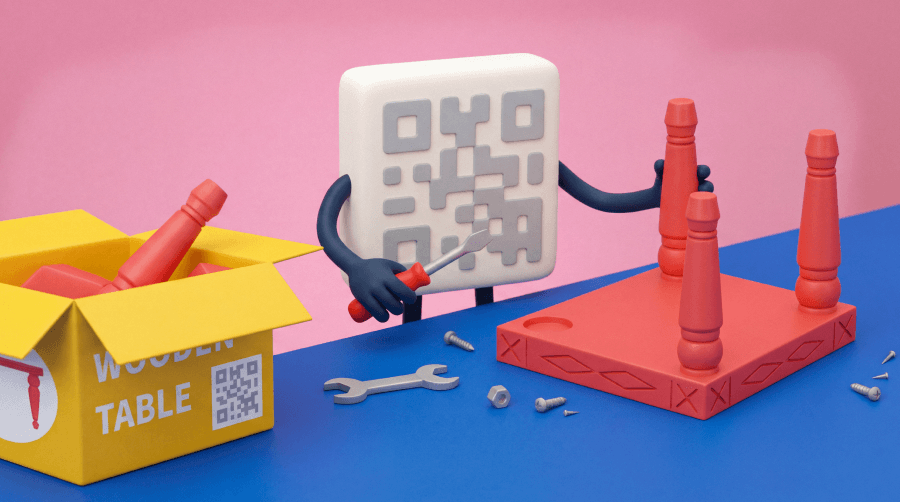
Setup creates one of the highest-value QR Code moments in the home-goods category. A customer has opened the box, spread the parts across the floor, and invested time in the product. Friction now can quickly turn excitement into frustration.
A setup QR Code can link directly to step-by-step assembly instructions, video walkthroughs, parts lists, tool requirements, and troubleshooting tips. Shelving units, tables, chairs, lighting, closet systems, and storage products all benefit from visual guidance, especially for complex DIY projects. A printed manual still helps, but a scan can show the exact angle, part orientation, or sequence that a flat diagram struggles to explain.
Brands can also use step-by-step video instructions with QR Codes to give customers a more confident setup path. That single scan can prevent support calls, reduce returns driven by confusion, and help customers enjoy the product faster.
After purchase: Extend support through ownership
The best QR Code experiences continue to help long after the sale, providing essential post-purchase support. Once a product is in the home, owners may need care instructions, cleaning guidance, warranty terms, replacement part requests, accessory replenishment, troubleshooting resources, or a support contact page.
A QR Code on an insert, product label, care card, or warranty card can keep those resources easy to find. Owners rarely keep every manual, receipt, or box, especially when purchasing through marketplaces like Amazon. A clear scan path saves them from searching online and guessing which result matches their exact product.
Best QR Code use cases for home goods brands and retailers
The most useful home-goods QR Code campaigns start with a customer need. Instead of asking, “Where can we add a code?” ask, “Where do people get stuck?” Then use the scan to remove that sticking point.
Setup, safety, and care
Assembly sits at the top of the list. QR Codes can send customers to product-specific videos, visual guides, downloadable manuals, and parts checklists. Add a clear call to action, such as “Scan for assembly steps,” and the customer knows exactly why the code deserves attention.
Safety and care deserve the same focus. Products involving heat, electricity, weight limits, sharp components, water, or moving parts often need clear guidance. QR Codes can link to cleaning recommendations, maintenance schedules, installation warnings, weight limits, and safe-use tips. Brands can also use product packaging touchpoints to keep support content close to the product from the first scan through long-term ownership.
Warranty, registration, and ongoing support
Warranty and registration flows often create friction, as customers often postpone them. They may lose the card, forget the URL, or feel unsure about which details they need. A QR Code can simplify the process by sending owners directly to the product’s registration page.
Brands can support this flow by offering product registration with QR Codes on inserts, labels, or warranty cards. The scan can lead to warranty terms, proof-of-purchase instructions, a support phone number, replacement part request forms, and accessory replenishment options. Keep the experience clear and respectful. Ask only for necessary details, explain the benefit, and make the form easy to complete on a phone.
Labels, tags, and shelf signage
QR Codes also shine on labels, tags, and shelf signage because shoppers already look there for guidance. The code can expand a small physical space into a full product-education moment, offering comprehensive product information at a glance. A rug tag can link to room-size tips and care details. A storage-bin shelf sign can link to fit guides and color options. A small-appliance label can link to feature comparisons, functionality details, and setup requirements.
A smart QR Code labels strategy gives each code a specific job. One label might help with product discovery, while another helps with ownership. That separation keeps each scan experience focused and useful.
What makes a home-goods QR Code experience work well
A QR Code only works when the surrounding experience earns the scan. Placement, call to action, and destination quality all matter.
First, placement should reflect intent. Put comparison QR Codes on shelf tags, hang tags, or front-facing packaging where shoppers make choices. Put setup QR Codes inside the box, on assembly inserts, or near the first step in the manual. Put care and warranty QR Codes on durable labels, care cards, or paperwork that owners may keep.
Second, the CTA should make the benefit obvious. “Scan for assembly steps,” “Scan to register your product,” and “Scan for care instructions” work better than “Scan me.” People scan faster when they know what they will get.
Third, the destination should load quickly, fit a mobile device screen, and answer the immediate question. Link an assembly code to the exact manual or video for that model. Link a warranty code to the right registration flow. Avoid sending scanners to a generic homepage and forcing them to search; instead, direct them to a dedicated landing page or specific product page.
How Dynamic QR Codes support long-term product experiences
Static QR Codes point to fixed destinations. Dynamic QR Codes give brands greater flexibility by allowing teams to update the destination URL without changing the printed code. That matters for home goods that sit on shelves for months and stay in homes for years.
Dynamic QR Codes help your team keep packaging and inserts useful longer. When a manual changes, a video improves, or a support page moves, you can update the scan destination without reprinting and redistributing boxes, labels, or cards.
These improved QR Codes also give teams scan data that can guide better support. You can see which codes people scan, when they scan, and which touchpoints attract engagement. Those insights can highlight confusing setup steps or popular support resources.
Scan insights help brands improve the experience over time. A team can swap in a clearer video, refine a registration page, or add new troubleshooting tips. The printed product keeps working, while the digital experience keeps getting better.
Turn home goods into connected experiences
Home goods prompt real user questions before, during, and after purchase. Shoppers want confidence. New owners want a smooth setup. Long-term owners want quick access to care, warranty, and support resources. QR Codes can answer those needs with practical, customer-friendly guidance at the exact moment people need it.
A thoughtful QR Code strategy turns packaging, labels, inserts, and signage into connected product experiences. It helps shoppers compare options, helps owners assemble and maintain products, and helps brands keep support content flexible over time.
QRCG makes that strategy easier with a Dynamic QR Code generator that teams can use to create, update, measure, and manage codes as products evolve.
Ready to start with a free QR Code to test the workflow? Sign up for QR Code Generator today and support shoppers and product owners from the shelf, through setup, to long-term use.
FAQs
How can QR Codes improve the home-goods customer experience?
QR Codes can make home goods easier to shop, set up, and maintain by giving people fast access to product details, assembly steps, care instructions, warranty terms, and registration pages. When the destination matches a real customer need, the experience feels more helpful and more connected.
Where should a home-goods brand place a QR Code?
The best placement depends on the moment the customer needs support. On-package QR Codes can help with setup and care, while shelf signage or tags can support comparison and product education. The most useful placement is the one that connects the scan to a clear, immediate next step.
What should a home-goods QR Code link to?
A home-goods QR Code should link to the most relevant next action, such as assembly instructions, a product registration page, safety guidance, dimensions, maintenance tips, or compatible accessories. The destination should be mobile-friendly, specific to the product, and easy to use without extra searching.
Are Dynamic QR Codes better for home goods?
Dynamic QR Codes are often a strong choice for home goods because they let brands update destinations after packaging, inserts, or signage have already been printed. That flexibility can help keep support content accurate, improve the customer experience over time, and reduce the need for reprints.
Can QR Codes work for both retail and post-purchase support?
Yes. QR Codes can help shoppers compare products in store, then continue helping after purchase with setup videos, care instructions, warranty details, and support resources. That makes them especially useful for home goods, where customer questions often continue well beyond the point of sale.



QR Code Generator
Your all-in-one QR Code marketing platform
Now you can fully customize your QR Codes with your brand colors and company logo, get scan statistics, and even edit the content after print.