QR Codes vs Barcodes: Key Differences and When to Use Each
Businesses rely heavily on both barcodes and QR Codes to organize their product catalogs, track inventory accurately, and connect physical items directly to exciting digital experiences. These two distinct tools consistently power everyday business operations across the globe. Retailers utilize them to facilitate incredibly fast checkout experiences for their shoppers. Warehouse managers depend on them to ensure highly accurate asset tracking within massive distribution centers, and ambitious marketers leverage them to launch engaging digital campaigns that capture audience attention instantly.
While a traditional barcode and a quick response code might look somewhat similar at a quick glance, they actually function quite differently. They serve very distinct strategic purposes across the modern supply chain and within the consumer journey. Choosing the right option will directly impact your overall operational efficiency. This decision also deeply affects the customer experience and determines your long-term campaign flexibility.
In this comprehensive guide, we’ll explain exactly how barcodes and QR Codes work in practical environments. We will explore the vital structural differences and the key functional differences between them, and you will learn exactly when each specific technology makes the most strategic sense for each aspect of your growing brand.
Note: The brands and examples discussed below were found during our online research for this article.
Key takeaways
- Standard barcodes function strictly as one-dimensional identifiers. Engineers design them primarily for product labeling and point-of-sale systems. This specific design philosophy makes them completely ideal for highly standardized retail environments.
- QR Codes feature a much more advanced two-dimensional structure. They can store significantly more information than traditional barcodes. This massive data storage capacity expertly supports rich digital experiences far beyond simple product identification.
- While standard barcodes work perfectly well for basic SKU-level tracking, QR Codes boldly enable complex item-level traceability. Modern marketers actively use QR Codes to drive marketing engagement and facilitate seamless smartphone scanning.
- Dynamic QR Codes uniquely introduce powerful editing tools and deep analytics capabilities. Traditional barcodes absolutely do not support these vital modern features.
- For businesses seeking ultimate flexibility, granular analytics, and genuine customer interaction, QR Codes very often provide much broader long-term value.
What is a barcode?
A standard barcode is a one-dimensional, machine-readable black-and-white graphic. It consists entirely of parallel vertical lines and corresponding blank spaces. These visual elements accurately represent basic numeric identifiers or very short strings of alphanumeric characters. Retailers and major logistics companies use these 1D barcodes widely across global supply chains. Cashiers typically scan them using dedicated laser scanners right at the retail checkout counter.

Manufacturers design standard barcodes primarily to identify broad product types. They do not identify unique individual items within a specific batch. Software developers frequently integrate these one-dimensional barcodes directly into modern point-of-sale systems. These identifiers rely heavily on highly standardized formats. For example, you will frequently see bar codes with the Universal Product Code or EAN format appearing on everyday consumer packaged goods. This strict adherence to specifications makes standard barcodes incredibly reliable and exceptionally efficient for high-volume retail systems. The traditional barcode system remains absolutely essential in many different fast-paced industries today.
What is a QR Code?
The term “QR Code” stands for “Quick Response Code.” A forward-thinking Japanese automotive company developed this two-dimensional matrix barcode back in 1994. Unlike a simple one-dimensional barcode, this dynamic tool stores data both horizontally and vertically. Because of this complex structure, you can easily encode full website URLs, comprehensive contact details, secure Wi-Fi credentials, direct payment links, and many other types of complex data.

These 2D codes also encode enhanced built-in error correction features. This feature ensures you can scan QR Codes from multiple different viewing angles effortlessly, even if dirt or damage obscures a fraction of the code. While technology professionals classify QR Codes as a specific form of 2D barcode, they successfully support far more versatile digital use cases than traditional fixed-ID barcodes. When you use QR Codes, you empower your customers’ mobile devices to act as highly intelligent digital scanners.
QR Codes vs barcodes: Key structural and functional differences
Let’s look at the main differences between these two types of printed codes in practical business terms:
Data capacity
Traditional barcodes store extremely limited identifiers. They usually hold between 8 and 25 characters, depending entirely on the specific format you choose. Conversely, QR Codes can easily store thousands of characters within a single matrix. In practical terms, standard barcodes simply identify general product lines. On the other hand, QR Codes identify specific items or link users directly to detailed product information. You can use QR Codes to seamlessly route your users to digital instruction manuals, customized marketing landing pages, or highly secure authentication portals.
Scanning requirements
Traditional barcode labels usually require dedicated scanning hardware. Cashiers must use a specialized barcode scanner to read product barcodes accurately. On the other hand, consumers can scan QR Codes quickly using almost any modern smartphone with a built-in scanner or a free barcode scanner app. This universal smartphone compatibility drastically expands your potential use cases, especially for direct marketing campaigns and ongoing customer engagement initiatives.
Error tolerance
QR Codes include highly sophisticated built-in error correction. This structural advantage allows them to remain perfectly scannable even if they sustain partial damage or distortion. In stark contrast, traditional barcodes require completely intact horizontal lines to guarantee accurate scanning. If a minor scratch obscures a single parallel line, the entire scanner fails. Consider some of the challenging real-world environments where QR Codes make sense: Warehouse stickers, outdoor event signage, and retail product packaging constantly face the risks of harsh wear and tear. Error correction can prevent many instances of frustrating manual data entry and the costly human errors that go along with it.
Customization and branding
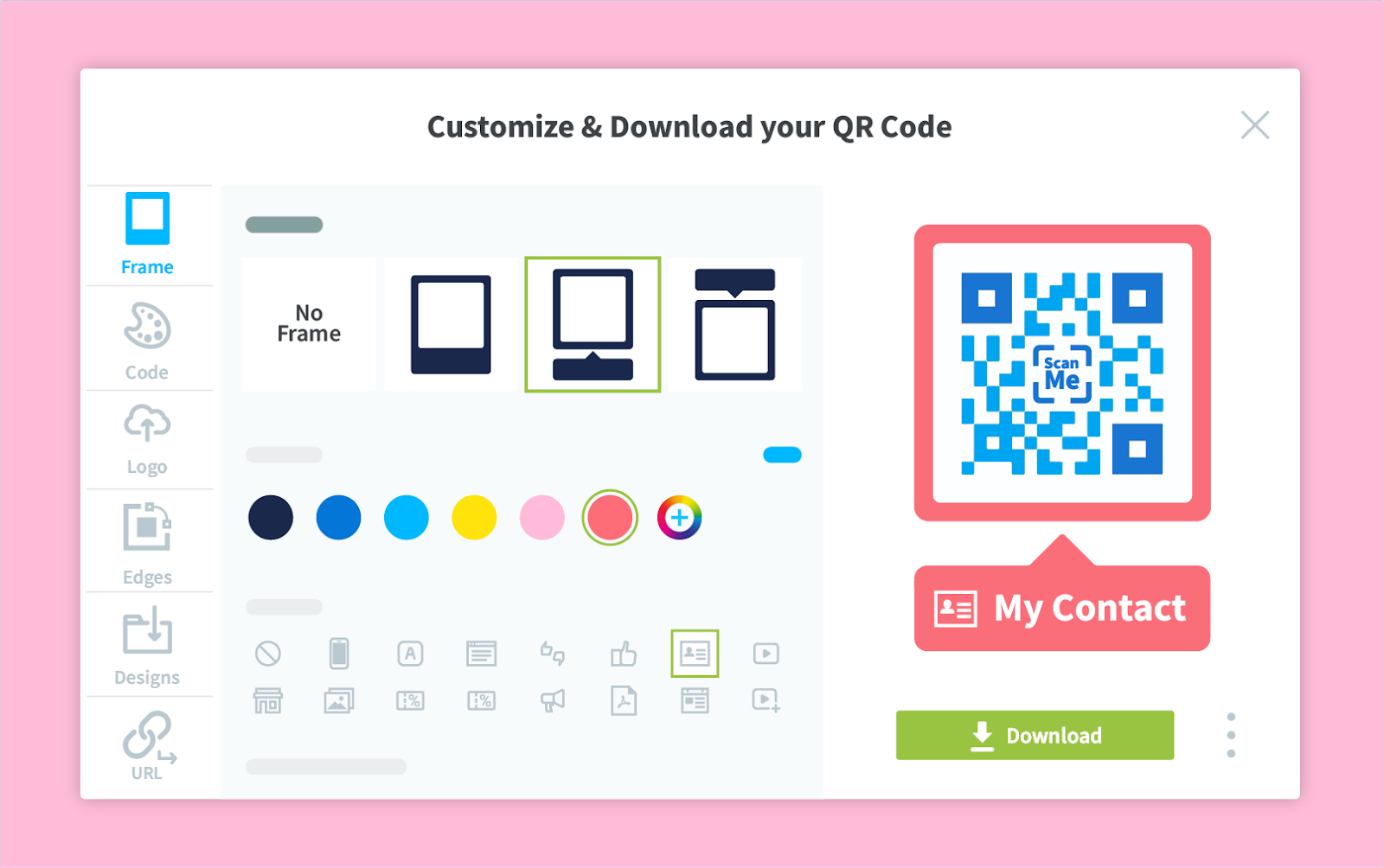
You must keep standard barcodes true to a single format to ensure total POS compatibility across different scanning processes in your supply chain. This requirement for uniformity leaves absolutely no room for creative branding with 1D barcodes. However, you can seamlessly incorporate vivid brand colors, unique company logos, and custom frames with explicit calls-to-action into your QR Codes. As long as you preserve high visual contrast when selecting colors and carefully maintain a clean “quiet zone” around the border of each QR Code, you can ensure that every physical-to-digital touchpoint you provide maintains your underlying brand identity.
When to use barcodes
You can confidently choose traditional barcodes when you operate strictly within established retail supply chains that feed to regular POS systems. Standard barcodes fit the bill when you are actively labeling high-volume consumer goods for retail distribution. Supply chain managers specifically select these codes when they must follow strict global trade item standards, and you need these one-dimensional barcodes when your team requires incredibly fast, hardware-based scanning capabilities at the checkout counter. These foundational tracking tools can help you gain the excellent reliability and total standardization required for seamless in-store and back-end operation.
When to use QR Codes
QR Codes prove ideal when ambitious businesses need active customer engagement. You can use them to provide incredibly easy digital content access for your target audience. They empower you to push flexible digital updates continuously without reprinting or replacing physical assets. You can also rely on them for highly precise item-level asset tracking when you use QR Code inventory management.
QR Codes allow you to uniquely identify individual physical items rather than just broad product categories. Some modern examples include complex manufacturing traceability and sustainability initiatives, packaging that shares comprehensive digital product manuals, and incredibly secure event ticketing. Software companies even use QR Codes to facilitate rapid app downloads directly from physical posters.
Static vs Dynamic QR Codes in comparison to barcodes
Not all QR Codes function the exact same way. This crucial technological distinction becomes absolutely critical when you compare them directly to traditional barcodes.
Static QR Codes
Static QR Codes embed their destination information permanently and directly into the code’s complex pixel pattern. You cannot edit this specific data after you finalize the initial creation process. Furthermore, these static codes offer absolutely no scan tracking capabilities. They are most suitable for permanent information-sharing tasks. Even though they lack editability after printing, Static QR Codes still offer greater data storage capacity and a more seamless smartphone scanning experience than standard barcodes. However, they simply cannot provide the editing flexibility and engagement tracking features most modern marketing teams demand.
Dynamic QR Codes
Dynamic QR Codes store a short redirect link instead of hardcoding the final destination content into the image. This clever redirect mechanism means you can effectively edit the code’s destination anytime you want. You totally eliminate the massive financial hassle of needing to reprint your expensive marketing materials, and also gain immediate access to incredibly robust scan analytics.
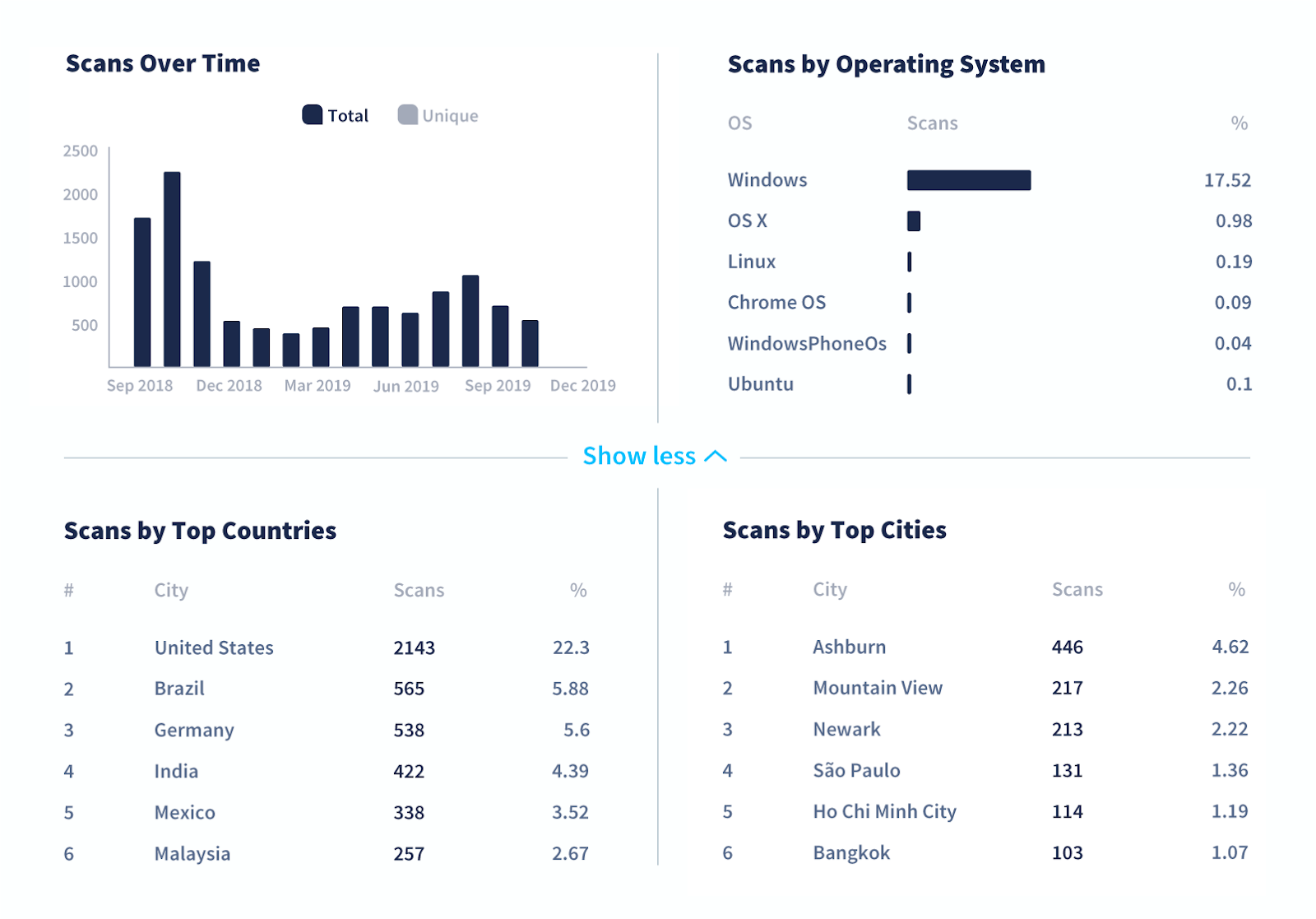
With Dynamic QR Codes, your marketing dashboard will clearly track the exact date, the geographic location (city/country), and the specific device type used for every single scan your code receives. Traditional barcodes simply can’t provide remote editing, intelligent redirect logic, or built-in tracking analytics. This robust tracking capability is the major strategic difference between the two formats.
Modern advantages of QR Codes over barcodes
Let’s look at the most compelling advantages of QR Codes in several strategic categories:
Digital engagement
QR Codes help you seamlessly connect your static physical materials to incredibly rich, interactive digital experiences like expanded product information, traceability documents, and engaging video content.

Inventory traceability and manufacturing
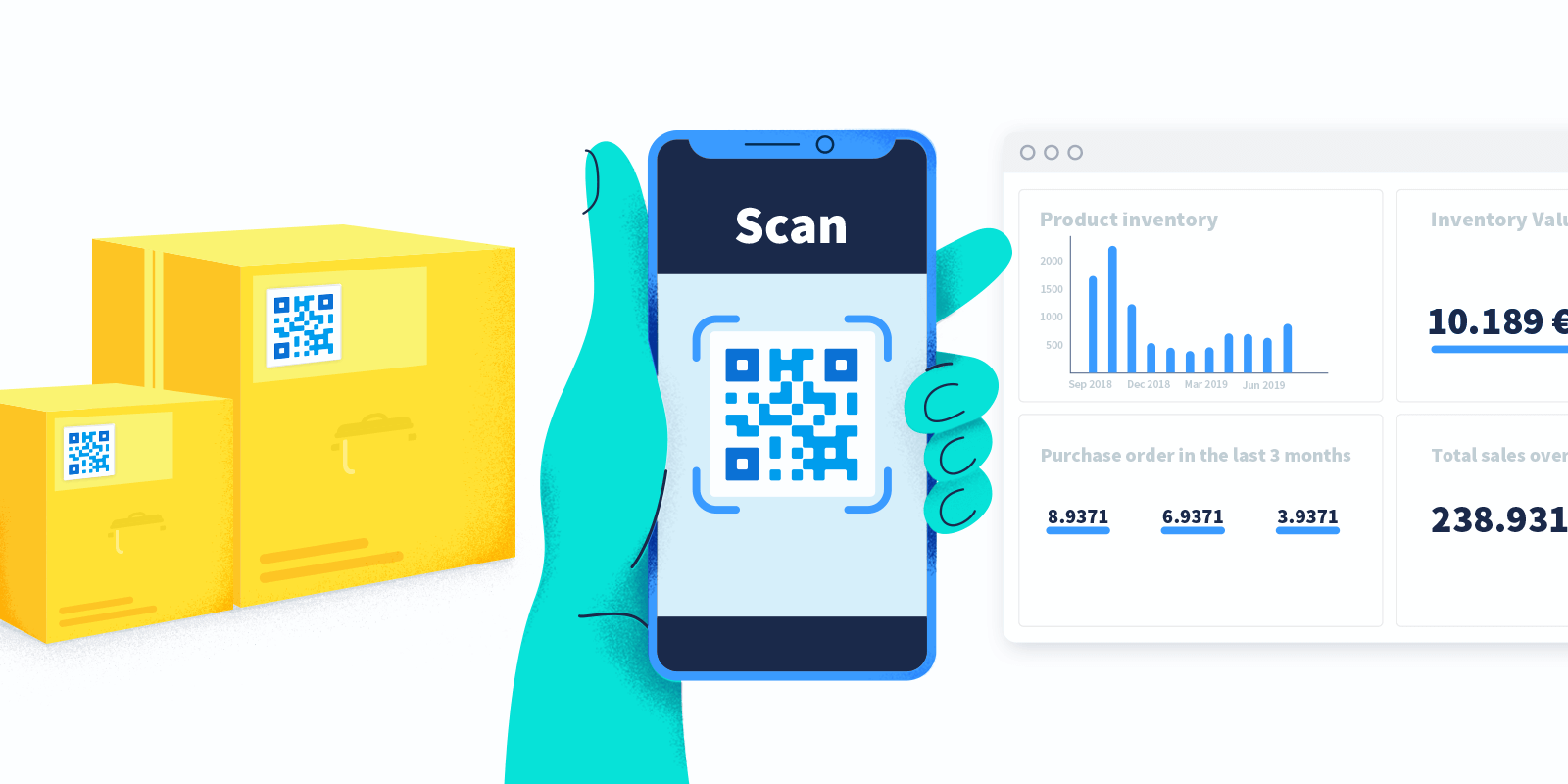
To see exactly how massive modern facilities apply this advanced technology, you should explore how using QR Codes for manufacturing completely transforms operations. You will quickly discover how these 2D codes support precise serialized tracking and amazing workflow automation.
Campaign measurement and ROI
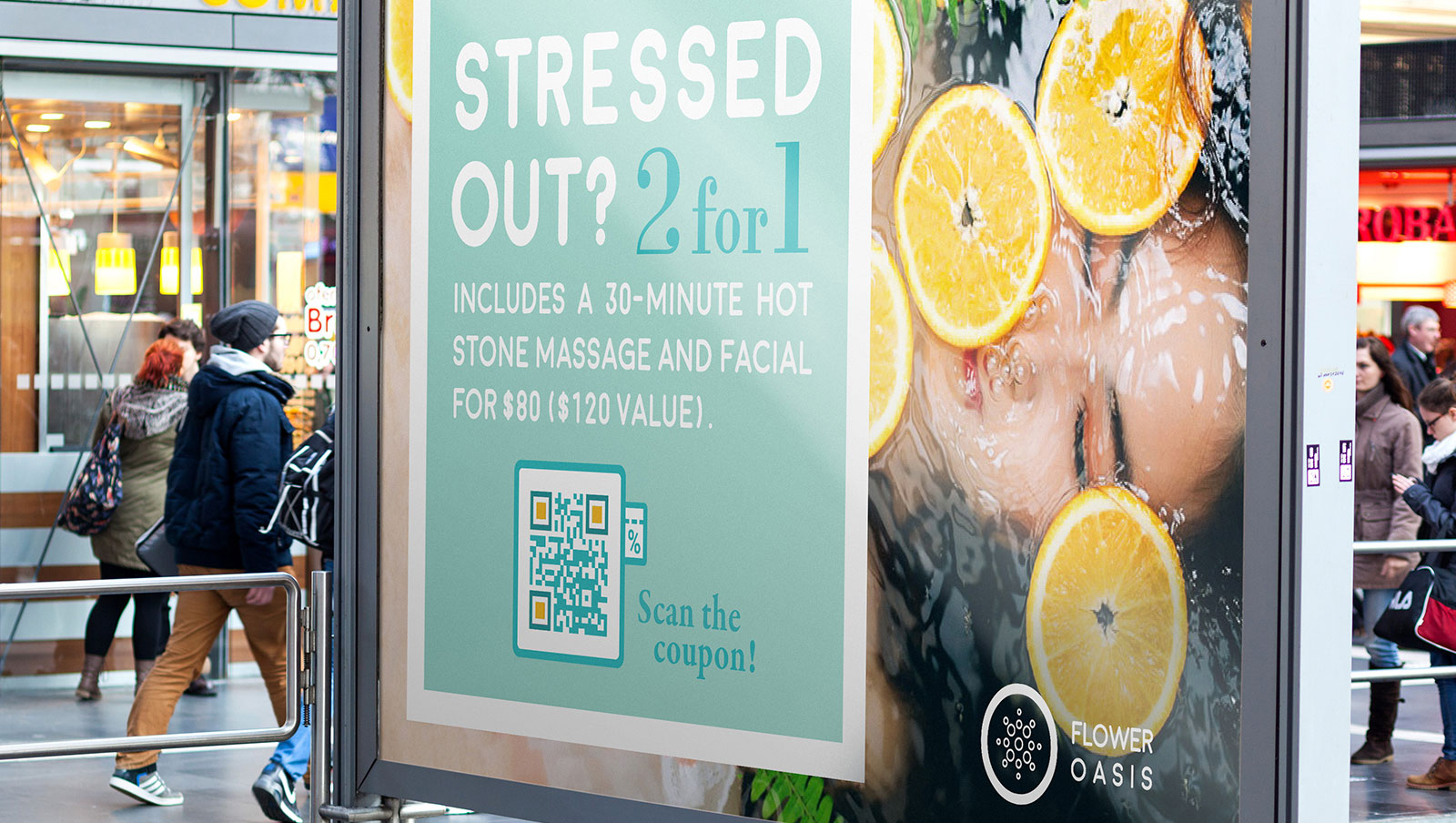
Dynamic QR Code analytics help make your physical print performance completely measurable in real-time. With the right QR Code campaign, you can gain clear, accurate visibility into your offline advertising efforts.
Operational flexibility
Updating your digital destinations remotely, using Dynamic QR Codes that are already in place, can drastically reduce reprinting costs and significantly increase your overall campaign adaptability. This adaptability is key when iterating during campaigns and trying to focus your spending and efforts on solutions that have proven to work.
Choosing the right solution for your business
You should choose barcodes if you specifically need SKU-level retail labeling. These codes are universally recognized as the standardized retail format for use directly with automated POS systems.
Conversely, choose QR Codes if you want authentic customer interaction, your agile team needs real-time editing power, and your executives want the ability to structure meaningful decisions around deep scan insights. They are the ideal tool for managing continuously evolving marketing campaigns. By using the best QR Code generator for your organization’s needs, you can quickly align this powerful technology with your distinct business goals.
Why QR Code Generator supports long-term QR success
QR Code Generator offers an incredible suite of tools to empower your teams. Our powerful platform provides both Dynamic and Static QR Codes, so you can enjoy complete access to real-time editing and incredibly robust scan analytics whenever required. We provide extensive branding customization options and amazingly powerful bulk generation capabilities.
The QR Code Generator toolset is ideal for low- to medium-volume businesses that want incredible flexibility without fighting through frustrating enterprise complexity. Compare your options by checking out our roundup of the best QR Code apps available on the market today.
Find the right code for your workflow
Standard barcodes remain absolutely essential for regular high-volume retail environments. They consistently fulfill their specific purpose brilliantly. However, QR Codes greatly expand the possibilities for your modern digital-first operations.
We encourage all readers to thoroughly explore how dynamic 2D codes can support your flexible, measurable marketing campaigns. These codes are really a game-changer when compared to the 1D barcodes of the past.
Ready to optimize your physical connections today? Get started with QR Code Generator now to begin your journey.
FAQs
Are QR Codes replacing barcodes?
QR Codes are rapidly expanding in modern marketing, modern payments, and deep asset tracking. However, major retailers continue to use standard barcodes incredibly widely in retail point-of-sale systems. Many clever businesses use both technologies together successfully. They make this operational choice depending heavily on their distinct operational needs and their specific customer engagement goals.
Do QR Codes hold more data than barcodes?
Yes. QR Codes consistently store significantly more information because they brilliantly use a two-dimensional structure. Traditional barcodes store highly limited numeric or alphanumeric identifiers strictly in a single horizontal line. Inventory managers use them primarily for basic product identification.
Can QR Codes work with inventory management systems?
Yes. Many robust inventory platforms proudly support QR Code scanning today. This technological compatibility allows smart businesses to seamlessly track individual items, specific product batches, and precise physical locations. QR Codes very often provide much more flexibility than traditional barcodes for complex serialized tracking and smart workflow automation.
Do QR Codes require special scanners?
No. Most modern consumers can effortlessly scan QR Codes using their default built-in smartphone camera app. Conversely, traditional barcodes typically require businesses to purchase dedicated laser scanners. You see this distinct requirement especially when operating in fast-paced retail checkout environments.



QR Code Generator
Your all-in-one QR Code marketing platform
Now you can fully customize your QR Codes with your brand colors and company logo, get scan statistics, and even edit the content after print.
