- Best Practices ●
- COVID-19 ●
- Industry Trends ●
- Partners ●
- Product ●
How Storage Units Can Use QR Codes to Modernize Operations

Traditional storage systems are inefficient. Handwritten labels, spreadsheets, or manual logs make tracking and retrieving items slow and error-prone. This manual approach creates friction for both facility operators and customers, wasting time on simple tasks like inventory checks and unit access. QR Codes transform physical storage into a dynamic, digital system that’s easier to manage, scale, and optimize over time.
This article explores how storage businesses, warehouses, and self-storage facility operations can implement QR Codes to streamline operations, enhance security, and deliver a better customer experience. It will also show how QR Code Generator PRO empowers businesses to set up scalable QR Code systems designed for long-term use, not just one-off projects.
Note: The brands and examples discussed below were found during our online research for this article.
-
Table of contents
- Why QR Codes are transforming modern storage operations
- Common challenges with traditional storage systems
- Key benefits of using QR Codes for storage
- Practical ways to use QR Codes in storage operations
- Inventory management and item tracking
- Self-service check-in and access
- Customer communication and documentation
- Building a scalable, future-ready QR Code system
- Best practices for managing and tracking storage data
- Create consistent naming conventions
- Connect QR Codes with existing tools
- Keep your QR Code system organized and durable
- Bringing smart storage into the future
Why QR Codes are transforming modern storage operations
Digital transformation isn’t just for large enterprises; self-storage operators of any size can upgrade their workflows using QR Codes. QR Codes bridge the gap between physical and digital spaces, turning a simple printed label into an interactive access point.
For example, a QR Code on a storage unit door can link directly to a customer’s inventory list, a unit’s maintenance record, or a secure payment portal. You can even implement QR Code maintenance logs to reduce downtime for facility equipment like gates and elevators. This approach aligns with modern consumer expectations, as more than 70% of self-storage customers now research and choose their facility online.
Common challenges with traditional storage systems
Traditional storage systems face many common issues: Misplaced labels, manual data entry errors, hard-to-update spreadsheets, and inconsistent tracking across different storage containers. These problems only get worse as facilities grow, stored items accumulate, and staff members change. A QR Code-based system keeps information consistent and accessible in real-time, even across multiple locations. This is a clear advantage when comparing QR Codes vs barcodes, as QR Codes can hold more data, are scannable from a distance, and are customized to fit your brand.
While barcodes typically hold a simple product identifier, a QR Code can store extensive information, like a direct link to a dynamic inventory list, customer contact information, or even a payment portal. Furthermore, QR Codes are easy to scan with any modern cell phone, even from a distance or at an angle, and allow customization with your brand’s logo and colors. These features make them a more flexible and user-friendly tool for the modern self-storage industry.
Key benefits of using QR Codes for storage
Highlighting the practical advantages, a QR Code system delivers immediate value:
- Efficiency: Enables faster check-ins, contactless data updates, and quicker retrieval of stored items.
- Accuracy: Reduces human error in inventory tracking and data logging.
- Scalability: Dynamic QR Codes allow you to update a code’s destination link at any time without reprinting the physical label.
- Customer experience: Provides customers with easier, on-site access to their unit details, payment portals, or support channels via their cell phone.
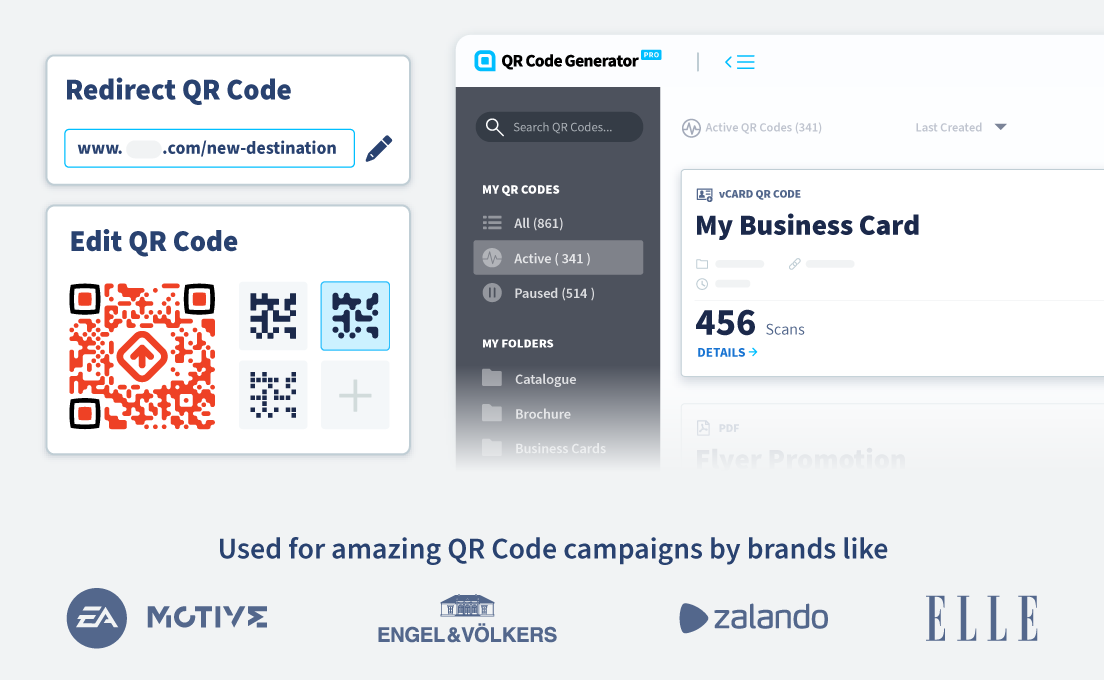
QR Code Generator PRO empowers you to manage all these codes from one secure, user-friendly dashboard, giving you full control over your operations. This centralized hub allows you to organize your QR Codes into folders (like “Unit Access,” “Inventory,” and “Marketing”).
You’re not just creating codes; you’re building a manageable system. This control is most powerful with Dynamic QR Codes. From the dashboard, you can instantly update the destination of a QR Code on a unit door, with no reprinting required.
This flexibility means your storage solutions can adapt in real-time. QR Code Generator PRO provides this scalable infrastructure, letting you manage everything from a single code on your business cards to thousands of QR Code labels across your entire self-storage facility.
Practical ways to use QR Codes in storage operations
From inventory management to customer communication, QR Codes fit naturally into every part of a storage business. These use cases show how facility operators can automate and streamline daily tasks.
Inventory management and item tracking
Attaching QR Code labels to boxes, bins, or shelves allows for quick content updates and real-time visibility. Instead of guessing what’s in a box, a quick scan can pull up a detailed inventory list. For example, you can link QR Codes to cloud folders, Google Sheets, or product databases for easy lookups. This is a core component of QR Code inventory management, transforming a static box into a smart, searchable asset.
For self-storage operators, this means you can streamline audits instantly. Even better, by using Dynamic QR Codes, you can update that Google Sheet or inventory file destination at any time. The QR Code on the box never changes, but the content it points to is always accurate.
Self-service check-in and access
QR Codes simplify unit booking, contactless access, and ID verification. Customers can scan a QR Code on facility signage to view gate instructions, access hours, or security rules, eliminating the need for paperwork or waiting in a front-desk queue. This service is critical, as today’s storage tenants increasingly expect digital-first experiences, like online rentals and smart, contactless entry.
A QR-enabled self-service model empowers customers, giving them ease of use and control over their storage solutions. Facility operators can automate this entire workflow with Dynamic QR Codes, allowing them to update gate hours or security rules instantly without reprinting signage, ensuring every customer has the correct information 24/7.
Customer communication and documentation
QR Codes on receipts, signage, or invoices can connect users directly to the information they need. This self-service approach empowers the customer and dramatically reduces front-desk questions.
For example, customers can scan a QR Code to:
- Review rental terms or safety policies (like what items users can and can’t store).
- Access digital payment portals for rent renewals or to review pricing. This contactless method simplifies billing and improves the customer experience.
- Submit service requests or support forms if they need help with a unit or billing.
Dynamic QR Codes are ideal for this, as they make it easy for storage managers to update links, like those to new policies or payment pages, without reprinting signage or customer marketing materials. This approach ensures all use cases remain current and functional, protecting your investment.
Building a scalable, future-ready QR Code system
QR Codes provide the most value when deployed as a long-term system, not just a one-off labeling project. The self-storage industry is growing, with one in three Americans using these storage facilities. A scalable system is essential to manage this growth.
You may have heard about another scannable format known as “Aztec codes.” When comparing Aztec code vs QR Code solutions, you should consider the end-user. While Aztec codes are powerful, QR Codes are far superior for the customer-facing demands of a self-storage facility. The primary reason is accessibility: Virtually every customer has a cell phone with a built-in scanner for QR Codes, enabling effortless contactless use cases like self-service check-in or accessing payment portals.
Furthermore, Dynamic QR Codes are specifically designed to link to updatable digital content, such as a personal inventory list or facility rules, a key feature of a modern storage system. This combination of universal ease of use and dynamic, marketing-friendly content makes QR Codes a more versatile tool for enhancing the customer experience than the more industrial-focused Aztec code.
We recommend creating a clear folder and taxonomy structure in QR Code Generator PRO so your codes stay organized as the self-storage business grows. Editable Dynamic QR Codes allow for quick response updates to form URLs, PDFs, or instructions as your inventory or policies evolve.
Best practices for managing and tracking storage data
To get the most from your new system, follow these best practices:
Create consistent naming conventions
Use clear and logical naming conventions for your codes. For example, use labels like “UNIT-A03” or “BOX-NYC-042” to keep labels easy to identify. This consistency helps teams find and update records quickly, whether they are managing 10 units or 10,000.
Connect QR Codes with existing tools
You can sync scan data with your existing spreadsheets or CRM systems for full visibility into unit status, access frequency, or maintenance needs. This integration turns simple QR Code scans into actionable business intelligence, helping you identify which units users access most often or which equipment needs service.
Keep your QR Code system organized and durable
Successfully using QR Codes for storage requires a durable, organized approach. We recommend printing on weather-resistant labels, training all staff to use the same scanning process, and regularly checking that links remain active over time.
Bringing smart storage into the future
QR Codes make storage management more efficient, transparent, and customer-friendly. They replace outdated manual processes with a streamlined digital workflow that saves time and reduces errors.
QR Code Generator’s intuitive platform empowers businesses to create and manage codes for any use case: Inventory management, access, documentation, or communication. Our QR Code generator helps you create the flexible, scalable storage solutions your business needs to grow.
Ready to automate your operations and build smarter storage solutions? Sign up for QR Code Generator PRO today and streamline every touchpoint in your facility.




 Add custom colors, logos and frames.
