- Best Practices ●
- COVID-19 ●
- Industry Trends ●
- Partners ●
- Product ●
5 Best QR Code Generator Tools (+ How to Choose One)

You likely see QR Codes everywhere in 2026. Restaurants use them for menus. Brands place them on product packaging to share sustainability stories. Marketers deploy them to bridge the gap between offline ads and online conversions. You might think all QR Code tools do the same thing, but that assumption often leads to frustrated teams and broken campaigns.
Choosing the best QR Code generator involves more than just finding a free tool that turns a link into a square image. You need a platform that supports Dynamic QR Codes, offers deep analytics, and scales with your business. Marketing teams, enterprises, and small businesses all require different levels of customization, security, and tracking. This guide helps you navigate the crowded market. We compare top QR Code generation tools based on functionality, pricing, and real-world performance so you can find the right solution for your goals.
Note: The brands and examples discussed below were found during our online research for this article.
-
Table of contents
- Key takeaways
- How we evaluated the best QR Code generators
- The best QR Code generation tools at a glance
- The 5 best QR Code generator tools reviewed
- 1. QR Code Generator PRO — Best QR Code generator for business
- 2. Uniqode — Best for security and integrations
- 3. Flowcode — Best for data privacy and first-party data capture
- 4. QR Tiger — Best for QR Code variety and flexibility
- 5. Canva — Best for Static QR Codes in design workflows
- Best free QR Code generators (and their limitations)
- How to choose the best QR Code generator for your needs
- Decide whether you need Static or Dynamic QR Codes
- Evaluate customization, branding, and scan performance
- Check for analytics, tracking, and optimization capabilities
- Review pricing, teams, and scalability
- Final verdict: What’s the best QR Code generator?
- FAQs
- Do QR Codes ever expire or stop working?
- How secure are QR Codes for business and customer data?
- Can QR Codes be optimized or personalized for different audiences?
- How are AI and automation changing the future of QR Code campaigns?
Key takeaways
- The best QR Code generator depends on your specific goals because marketing teams, enterprises, and individuals all require different features.
- Dynamic QR Codes offer significantly more flexibility than Static QR Codes by allowing you to edit destinations, track scans, and optimize campaigns over time.
- Advanced customization and branding features improve scan rates and help QR Codes feel like a seamless extension of your brand identity.
- Built-in analytics are essential for measuring metrics, understanding audience behavior, and proving ROI from QR Code campaigns.
- Free QR Code generator tools can work for basic use cases, but paid tools deliver the control, insights, and reliability needed for long-term growth.
How we evaluated the best QR Code generators
We analyzed dozens of tools to find the ones that actually deliver value. We looked beyond the basic ability to generate QR Codes and focused on criteria that matter for professional use.
- Dynamic QR Code support: Can you edit the redirect link after printing? This feature is non-negotiable for serious marketing campaigns.
- Customization and branding: Does the tool allow you to add logos, change brand colors, and use custom frames? Visual appeal impacts how many people scan.
- Analytics and tracking: Do you get real-time data on scan locations, device types, and dates?
- Integrations and API: Can you connect the tool to your CRM, Google Analytics, or other marketing software?
- Pricing transparency: Are the costs clear, or do they hide essential features behind expensive upgrades?
- Scalability: Can the platform handle unlimited scans and large-scale code generation for enterprise needs?
Different users need different things. A solo creator might prioritize a free plan, while a global brand needs enterprise-grade security and custom domains.
The best QR Code generation tools at a glance
Use this table to quickly compare top contenders based on your primary needs.
| Tool | Best For | Pricing Tier | Dynamic Support | Analytics |
| QR Code Generator PRO | Enterprise marketing & Business | Free / Paid | Yes | Advanced |
| Uniqode | Security & Integrations | Free / Paid | Yes | Advanced |
| Flowcode | Data privacy & 1st Party Data | Free / Paid | Yes | Advanced |
| QR Tiger | Variety & Flexibility | Freemium | Yes | Basic |
| Canva | Static codes in Design | Free | No | None |
The 5 best QR Code generator tools reviewed
We tested these platforms to see how they handle real-world marketing materials and operational workflows. Here is what we found.
1. QR Code Generator PRO — Best QR Code generator for business
QR Code Generator PRO stands out as a powerful, all-in-one solution for businesses that want to drive engagement and track results. It combines an intuitive interface with deep, advanced features designed for scalability.
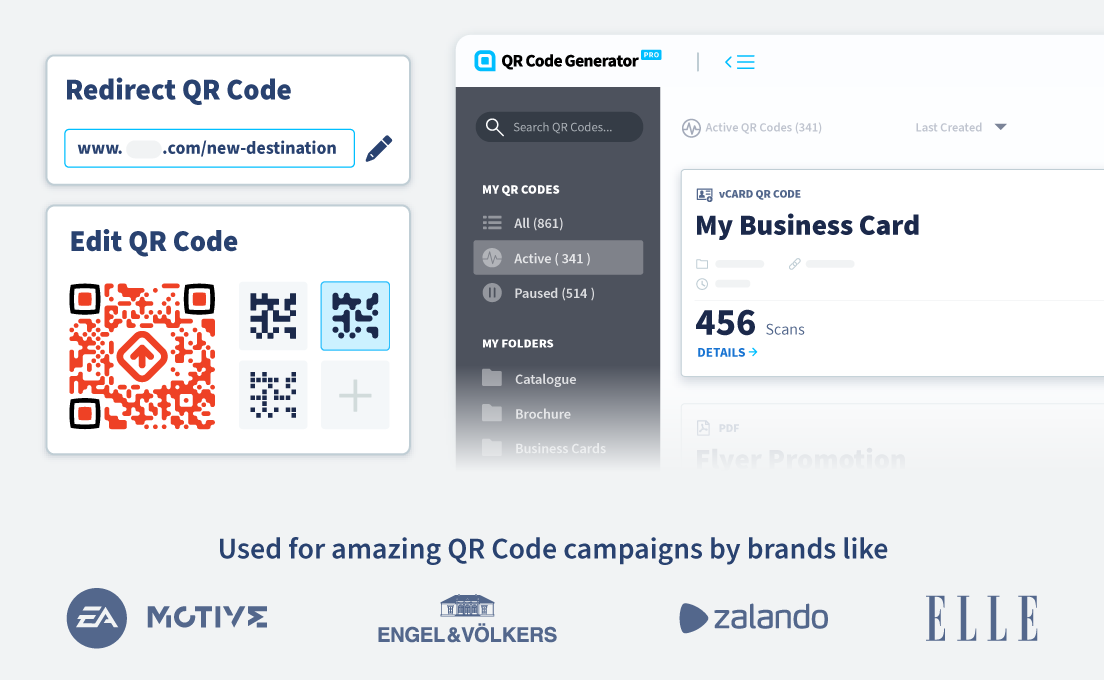
You gain full access to Dynamic QR Codes. This flexibility allows you to change the destination of your codes anytime. You can fix a typo in a URL or update a seasonal promotion without reprinting your packaging or posters. The platform also provides a robust analytics dashboard. You can see exactly where and when people scan your codes, which helps you refine your strategy in real-time.
The tool offers extensive customization options. You can choose from various design templates, adjust corner shapes, and add your logo to the center. You can also create specific types of codes, such as a vCard QR Codes for networking or PDF QR Codes for sharing menus and brochures. Teams appreciate the bulk creation capabilities and API access, which streamline operations for large campaigns.
Best for: Marketing teams and businesses that need reliable, trackable, and branded Dynamic QR Codes at scale.
2. Uniqode — Best for security and integrations
Uniqode (formerly Beaconstac) positions itself as a security-first platform. It targets enterprises that have strict compliance requirements and need seamless integrations with their existing tech stack.
The platform offers features like SSO (Single Sign-On) and SOC 2 compliance. You can integrate it directly with tools like Salesforce and Zapier to automate your workflows. Uniqode allows you to create Dynamic QR Codes and track detailed performance metrics.
The company also focuses heavily on digital business card solutions. You can create and manage digital profiles for your entire workforce from a central dashboard. While powerful, the interface and feature set can feel overwhelming for smaller teams just looking for a simple QR Code maker.
Best for: Large enterprises that prioritize security, compliance, and deep software integrations.
3. Flowcode — Best for data privacy and first-party data capture
Flowcode emphasizes data ownership and privacy. It appeals to brands that want to build direct relationships with their customers without relying on third-party cookies.
The company’s proprietary circular code design stands out visually, though it also supports standard square codes. Flowcode focuses on capturing first-party data through features like conversion pixels and contact collection forms. You can use the platform’s analytics suite to understand the full customer journey from scan to conversion.
Flowcode offers a free plan, but many advanced data features require a paid subscription. The platform suits marketers who want to turn offline traffic into online leads while maintaining strict data privacy standards.
Best for: Brands focused on building first-party data assets and maximizing conversion tracking.
4. QR Tiger — Best for QR Code variety and flexibility
QR Tiger offers a wide range of QR Code solutions for various niche use cases. It functions well for users who need specific code types beyond the standard URL redirect.
You can generate codes for social media profiles, MP3 files, and multi-URL redirects based on language or location. The platform provides a user-friendly editor for customizing your QR Code design. You can change patterns, corner eyes, and colors to match your brand.
QR Tiger operates on a freemium model. You can create free Static QR Codes, but you need a paid plan to unlock dynamic codes and advanced tracking. The platform serves as a solid option for agencies or individuals who need creative flexibility.
Best for: Agencies and marketers who need diverse code types and flexible design options.
5. Canva — Best for Static QR Codes in design workflows
Canva is primarily a design platform, but its built-in QR Code generator offers incredible convenience for visual creators.
You can generate a code directly inside your design project. This saves you from switching tabs or downloading files. You simply enter your URL, and the code appears on your canvas. You can then customize the color to match your flyer or social media post.
However, Canva natively generates Static QR Codes. You cannot edit the embedded link later, and you cannot track scans. If you print a code from Canva and the link breaks, you must reprint the entire design. This solution works perfectly for one-off projects or permanent links like wifi login posters, but it lacks the power needed for active marketing campaigns.
Best for: Designers and small business owners creating quick visual assets who do not need tracking or editing capabilities.
Best free QR Code generators (and their limitations)
You might wonder if you can just use a free QR Code generator. The answer depends on your goals. Free tools like Adobe Express or the basic version of QR Code Monkey allow you to create Static QR Codes quickly.
These tools work well for personal use. You can make a code for home network key sharing or a redirect to a personal website. You typically get a high-quality PNG or SVG file. However, you face significant limitations.
- No editing: You cannot change the destination URL. If you make a mistake or your destination changes, you must create a new QR Code.
- No tracking: You will never know how many people scanned your code, or learn any information about their device types and locations.
- No support: If something breaks, you are on your own.
- Scan limits: Some “free” Dynamic QR Codes stop working after a certain number of scans.
Use free tools for permanent, low-risk links. For anything involving your business or marketing materials, a paid platform offers the safety and data you need.
How to choose the best QR Code generator for your needs
Selecting the right platform involves asking the right questions. Do not just look at the price tag. Consider how you will use the codes today and in the future.
Decide whether you need Static or Dynamic QR Codes
This is your most important decision. Static QR Codes embed the data directly into the pattern. They are permanent. Dynamic QR Codes use a short URL to redirect users to your destination.
Choose Dynamic if you plan to use the code for marketing, business cards, or packaging. You need the ability to update the link if your content changes, and if you don’t collect analytics data, you will be flying blind. Choose Static only for personal tasks or links that will never change, like fixed inventory database URLs.
Evaluate customization, branding, and scan performance
Your code must look good and scan fast. Look for a QR Code creator that allows you to add your logo, use your brand colors, and create custom frames with an integrated call-to-action.
However, customization should not break scannability. The best tools ensure your design remains readable by smartphones. They provide vector-based files like SVG or EPS for printing at any scale. Avoid tools that produce low-res images that look blurry on large posters.
Check for analytics, tracking, and optimization capabilities
Data drives growth. You need a platform that reports metrics beyond simple scan counts. Look for unique scans, time of day, location data, and device type.
This information helps you optimize your campaigns. If you see scans coming from a specific city, you can tailor your content for that audience. If scans peak on weekends, you can adjust your ad timing. Advanced platforms connect this data to Google Analytics and other data analysis suites for a complete view of user behavior.
Review pricing, teams, and scalability
Start small, but plan for growth. Check if the platform enables you to add team members and manage permissions. If you are an agency, look for white-label options.
Review the pricing tiers carefully. Some platforms charge per code, while others offer unlimited scans for a flat fee. Ensure the plan you choose supports the number of scans and active codes you expect to need, and can scale up if you underestimate.
Integration capabilities are another important consideration. Look for a solution with an open API that lets you automate QR Code creation and deliver analytics insights to the rest of your marketing tech stack.
Final verdict: What’s the best QR Code generator?
The best QR Code generator is the one that aligns with your business objectives.
For most businesses and marketing teams, QR Code Generator PRO offers the best balance of power and usability. You get robust Dynamic QR Codes, deep analytics, and intuitive design tools that let you create professional assets in minutes. It scales from a single user to a large enterprise without complexity.
If you need specific enterprise security features, Uniqode is a strong contender. If you prioritize data privacy above all else, look at Flowcode. For quick, Static QR Codes, Canva remains a handy tool. Make your choice based on the value of the connection you want to build. A reliable code creates a seamless bridge to your brand.
Ready to make some reliable codes? Get started with QR Code Generator PRO today and tap into the tools that are right for your team.
FAQs
Do QR Codes ever expire or stop working?
QR Codes themselves do not expire, but the destination they point to can change or become unavailable. Static QR Codes are permanent; you cannot edit them once created. Dynamic QR Codes can stop working if your subscription ends or if you disable the destination link. For long-term or printed campaigns, it remains important to understand how your provider manages redirects and account status to ensure QR Codes work continuously.
How secure are QR Codes for business and customer data?
QR Codes generally offer security, but the level of protection depends on the generator and hosting infrastructure behind them. Enterprise-grade platforms offer features like HTTPS destinations, access controls, two-factor authentication, and compliance with privacy standards such as GDPR. Using a reputable QR Code generator reduces the risk of malicious redirects and data misuse.
Can QR Codes be optimized or personalized for different audiences?
Yes, Dynamic QR Codes allow businesses to personalize experiences by directing users to different content based on factors like location, device type, or time of scan. This enables more relevant messaging and higher engagement across campaigns. Personalization also makes it easier to test and optimize performance over time.
How are AI and automation changing the future of QR Code campaigns?
AI makes QR Code campaigns more adaptive by enabling automated optimization, smarter targeting, and predictive insights based on scan data. As platforms evolve, codes can dynamically adjust destinations, personalize experiences at scale, and surface deeper performance insights without manual intervention. This shift turns codes from static links into continuously improving engagement tools.




 Add custom colors, logos and frames.
